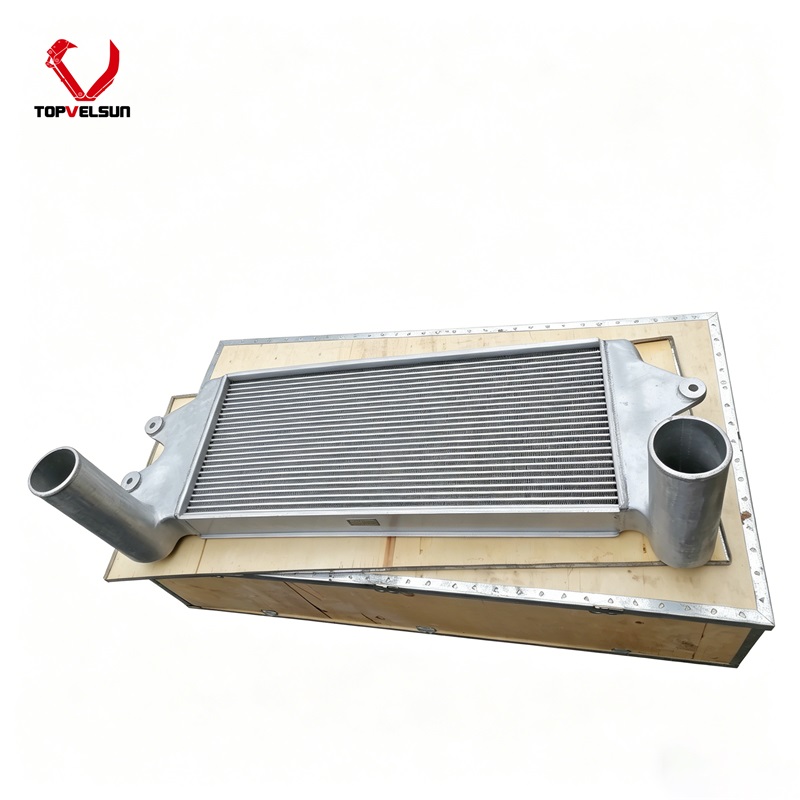
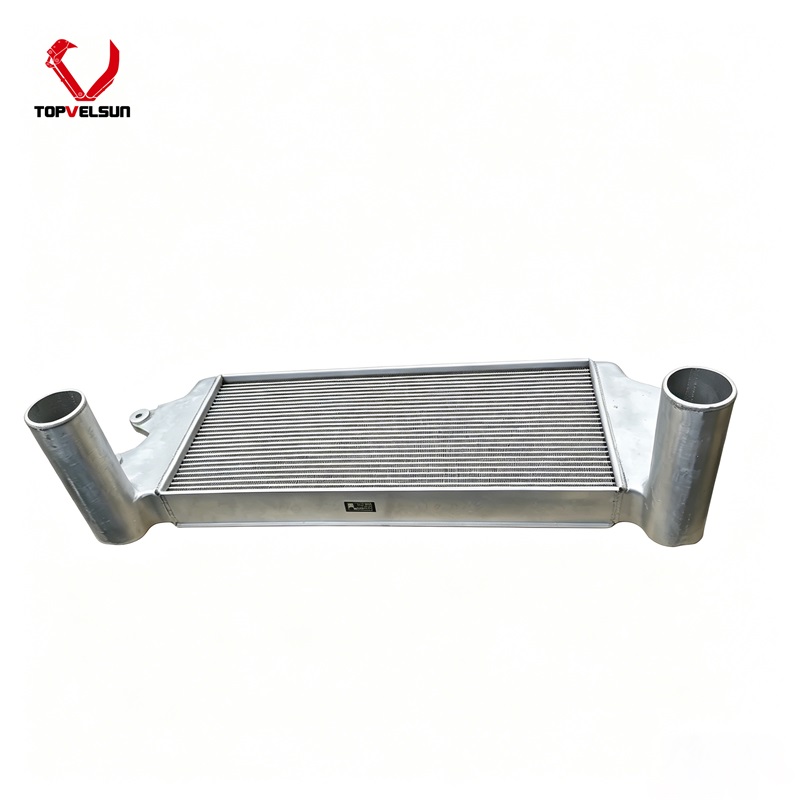
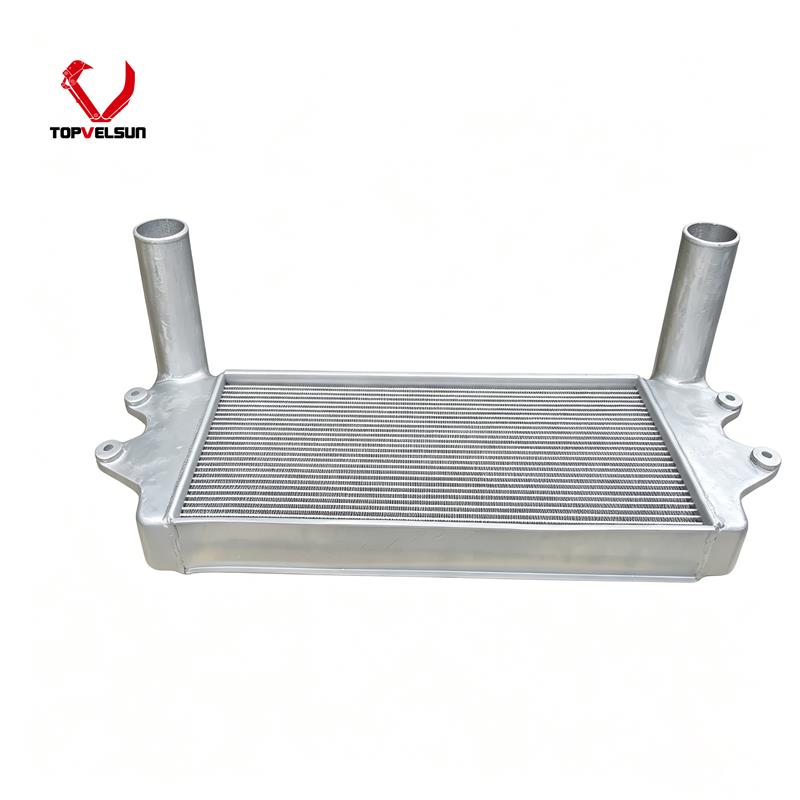
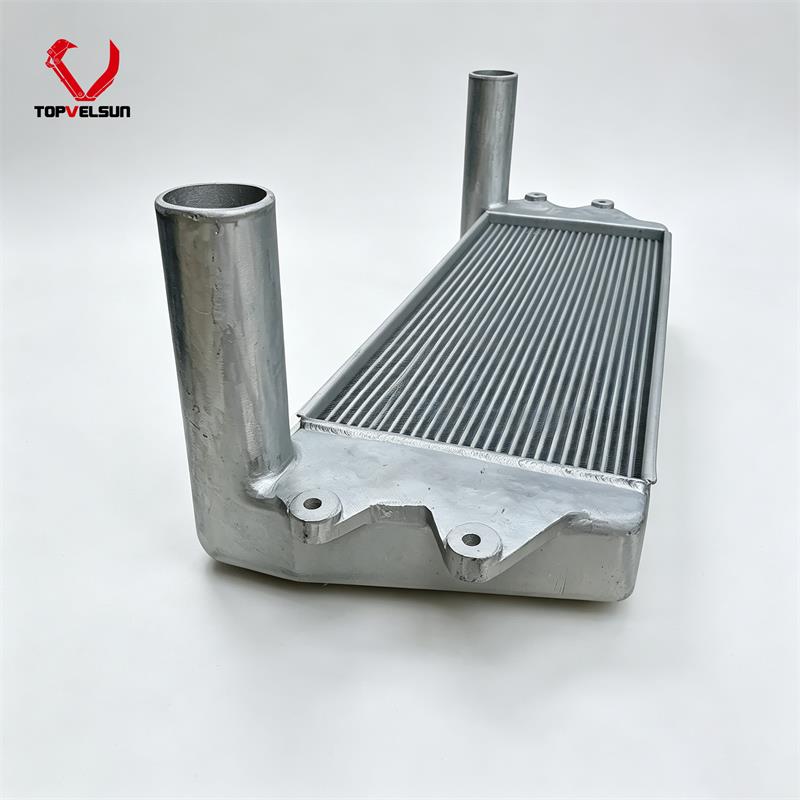
Part Number: 11NB-42070
MOQ: 1 Piece
Weight: 25 kg
Warranty: 6 Months
Lead Time: 7 - 15 Business Days
Cross Ref: 11NB-42071, 11NB-42072
Compatible: R450LC-7A, R500LC-7A, R450LC-7, R500LC-7, R510LC-7
Product Description
In the massive 45-to-50-ton excavation class, the Cummins QSM11 engine requires an immense volume of air to maintain its breakout force. As the turbocharger compresses this air, temperatures skyrocket (often exceeding 120°C). If this superheated air enters the cylinders, it lacks the necessary oxygen density, resulting in incomplete combustion, excessive fuel consumption, and severe carbon buildup.
Our premium aftermarket 11NB-42070 (and upgraded 11NB-42072) Charge Air Cooler (CAC) is the ultimate thermal management solution. Engineered to withstand high-pressure spikes (tested up to 0.6 MPa), this cooler drastically drops intake temperatures by over 45°C. By feeding dense, oxygen-rich air (below 75°C) into the QSM11 cylinders at flow rates of 450–550 m³/h, this charge air cooler restores your excavator's peak horsepower, dramatically reduces fuel burn, and lowers your overall Total Cost of Ownership (TCO).
When your Hyundai 7-Series excavator exhibits the following symptoms, the charge air cooler has likely failed physically or become obstructed:
1. Severe Power Loss & Heavy Black Smoke
Symptom: The machine struggles under load, and thick black smoke pours from the exhaust stack.
Troubleshooting: Continuous vibration from rock-breaking or heavy digging often cracks the aluminum welds on the charge air cooler. This allows the highly pressurized boost air (0.25–0.35 MPa) to escape before reaching the engine. Listen for a loud "hissing" sound under the hood when the engine is revved. If a soapy water test reveals bubbles on the welds, the internal pressure is lost, and the 11NB-42070 assembly must be replaced.
2. High Intake Temperature Alarms / Overheating
Symptom: The dashboard triggers intake temp warnings, and the engine coolant temperature may also run unusually high.
Troubleshooting: The exterior cooling fins are packed with quarry dust, mud, or debris. If more than 30% of the cooler's face is blocked, ambient air cannot pass through to extract heat from the turbo boost.
3. Oil Dripping from the Cooler / Engine Burning Oil (Blue Smoke)
Symptom: You find engine oil pooled at the bottom of the charge air cooler housing.
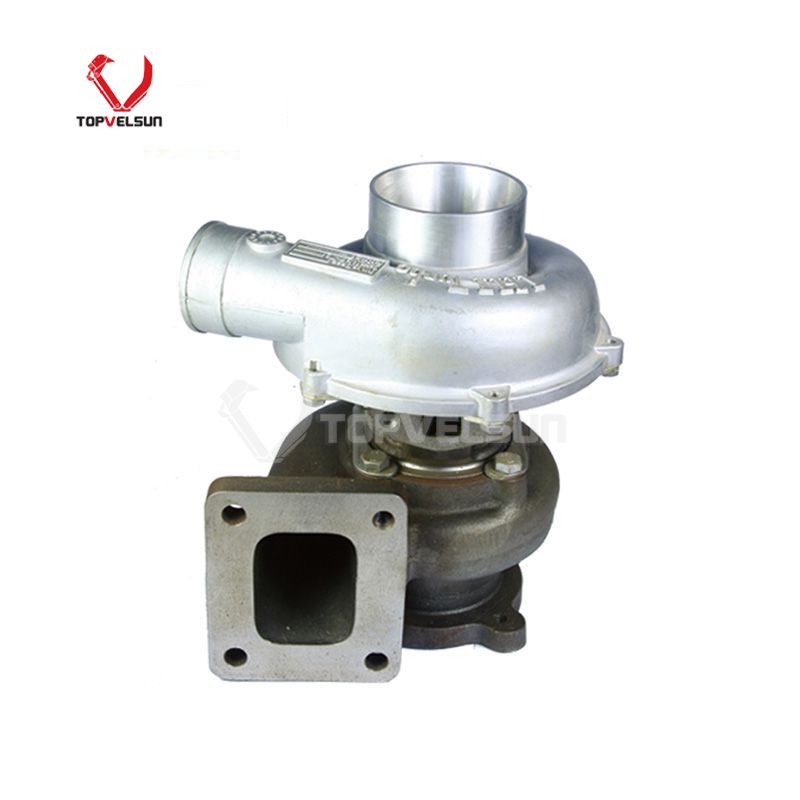
Troubleshooting: This is usually a secondary failure. The primary culprit is a blown seal inside the upstream turbocharger, which pumps raw engine oil into the intake tract. The oil pools inside the bottom of the CAC, coating the internal tubes and destroying their heat-transfer capabilities.
Mandatory High-Temp O-Rings: When connecting the φ120 mm flanged pipes, you must use high-temperature silicone O-rings (rated for -40°C to +150°C). Do not substitute with standard rubber O-rings or liquid gasket maker. Standard rubber will bake, crack, and get sucked into the QSM11 cylinders, causing catastrophic engine failure.
Flexible Mounting is Critical: A 25 kg all-aluminum heat exchanger is highly sensitive to chassis twisting. Ensure all four original rubber isolation mounts are intact during installation. Tighten the mounting bolts to the factory spec, but never compress the rubber mounts completely flat. The cooler must be allowed to flex with the machine's vibration; otherwise, the aluminum welds will tear instantly.
Crucial Pre-Installation Check: If you are replacing the old charge air cooler because it was filled with oil, you must repair or replace the turbocharger first. Installing a brand new 11NB-42072 cooler behind a blown turbo will ruin the new unit within days as it fills with oil again.
Cleaning Restrictions: Clean the exterior fins every 500 hours using low-pressure compressed air blowing from the inside out. Never use a high-pressure water washer directly on the fins. The water pressure will flatten the delicate aluminum fins, permanently blocking airflow and destroying the cooler's efficiency.
Tel.: +86 20 3203 3683
Mobile: +86 13129352980 or 13826060208
E-mail: VLS09@topvelsun.com
Address: SHOP 101,BUILDING A,NO.141,ZHUCUN EAST RING ROAD,TIANHE DISTRICT,GUANGZHOU
Copyright © Guangzhou Topvelsun Machinery Equipment Co., Ltd. All Rights Reserved. |
Sitemap | Technical Support 
Tel.: +86 20 3203 3683
E-mail: VLS09@topvelsun.com