Technical Guides
Home << News << Technical Guides << Kobelco Excavator Fault Code Reference Guide: Troubleshooting and SolutionsKobelco excavators are highly regarded for their durability and advanced technology. However, like all heavy machinery, they can experience faults that require timely attention. Understanding how to diagnose and troubleshoot Kobelco excavator fault codes can prevent unnecessary downtime and reduce repair costs. Now, let's get to the point, we'll walk you through the common fault codes, their meanings, and how to troubleshoot and resolve these issues efficiently.
This fault-code reference guide is compiled and cross-checked against factory service/workshop manuals, wiring diagrams, and diagnostic trouble code (DTC) documents for Kobelco excavators. Because fault code definitions and test procedures can vary by model, engine, and control system version, always confirm the exact diagnostic steps using the service manual that matches your machine’s model and serial number.[1]
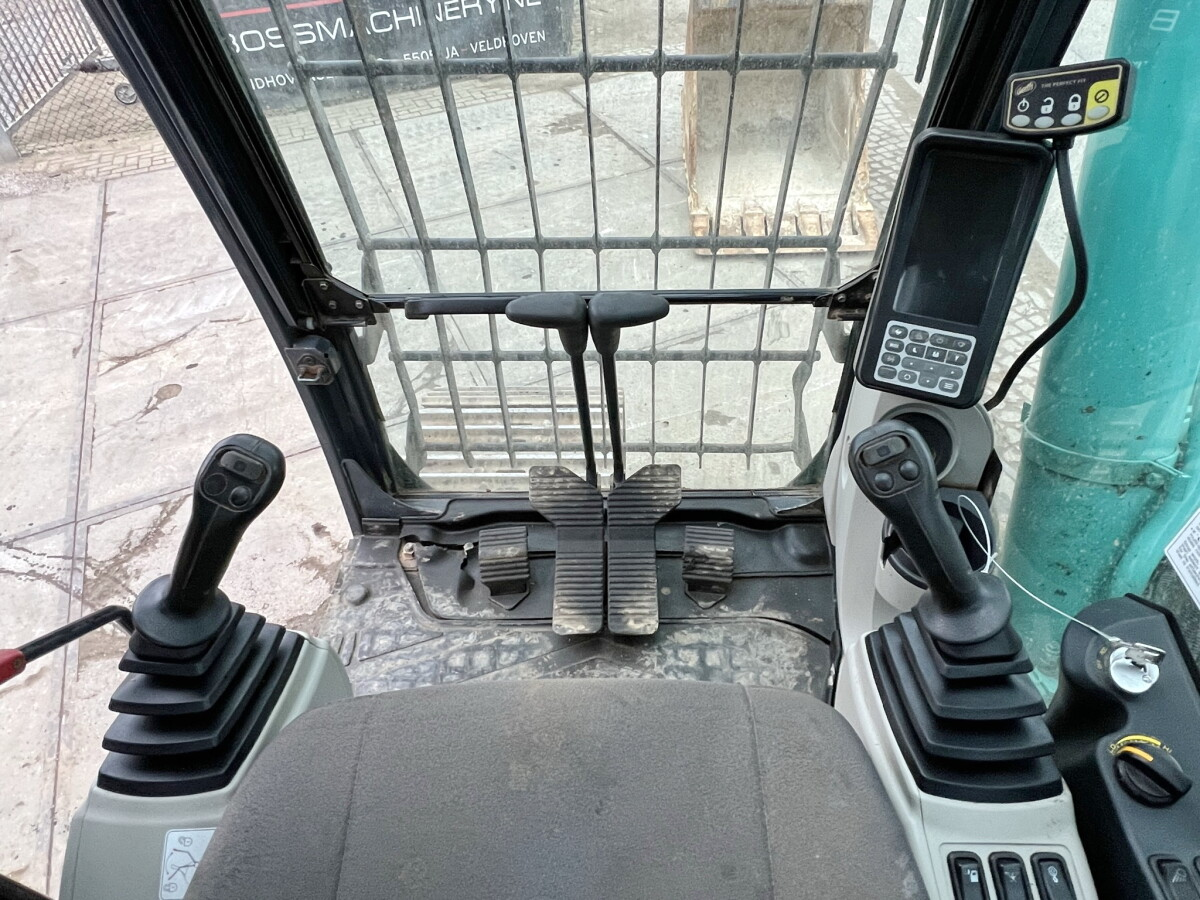
Kobelco excavators are equipped with an electronic control system that continuously monitors the machine’s performance. When an issue occurs, the system detects it and displays a corresponding fault code on the multi-function display screen.
Turn the ignition switch to the "ON" position.
Within 10 seconds, press the buzzer stop switch five times continuously to access the fault code screen.
The screen will show up to 20 fault codes, beginning with the earliest detected fault.
Engine time and fault data will be shown on the display.
If more than three fault codes are detected, the system will display them in sets of three every 5 seconds.
Navigate through the fault codes using the work mode switch and buzzer stop switch.
To exit the display, turn the ignition switch to the "OFF" position.
After reviewing the fault codes, you can clear them using the following method:
Access the fault code screen again as described above.
Simultaneously press and hold the work mode switch and buzzer stop switch for 10 seconds.
The screen will then display "No Abnormality," indicating that all fault data has been cleared.
Turn the ignition switch off to exit.
“Codes and definitions may vary by model/engine; always verify with the model-specific service manual.”[2]
Below is a list of common Kobelco excavator fault codes for the SK200, SK210, SK230, SK250-6E,SK330 and other models, along with their corresponding problems and suggested solutions.
A-1: ROM data error — This indicates an issue with the internal memory of the ECU.
A-2: A-level fault — A general fault with the ECU that may require reprogramming or replacement.
B-1: Boom up pressure sensor malfunction — Inspect wiring connections and sensor for faults.
B-2: Boom down pressure sensor malfunction — Check the sensor's functionality and wiring for damage.
B-3: Arm extend pressure sensor malfunction — Inspect for wiring issues or sensor failure.
B-4: Arm retract pressure sensor malfunction — Check the wiring and sensor for faults.
B-5: Bucket retract pressure sensor malfunction — A sign of sensor failure that could cause improper bucket function.
B-6: Bucket dump pressure sensor malfunction — Inspect the sensor for damage or malfunction.
B-7: Right rotation sensor malfunction — Indicates an issue with the right-side rotation system.check the wiring and connections to ensure normal operation.
B-8: Left rotation sensor malfunction — This fault indicates an issue with the left-side rotation system. Inspect the wiring and connections to ensure proper functionality.
B-9: Right travel pressure sensor malfunction — Indicates potential issues with the travel system or sensor wiring.
B-10: Left travel pressure sensor malfunction — This may point to problems with the left travel system. Inspect the sensor and wiring for possible faults.
B-11: P1 negative pressure sensor malfunction — Check the connections of the P1 negative pressure sensor, as a malfunction can cause issues in hydraulic control.
B-12: P2 negative pressure sensor malfunction — Similarly, inspect the wiring and functionality of the P2 negative pressure sensor for any malfunctions.
B-15: Back pressure sensor malfunction — Inspect the back pressure system for any blockages or faulty components that may cause incorrect readings.
B-16: P1 optional sensor malfunction — This indicates a malfunction in the optional sensor on the P1 side, which may require replacement.
B-17: P2 optional sensor malfunction — Inspect the P2 optional sensor for failure or disconnections.
C-1: P1 pump pressure sensor malfunction — Likely indicates a malfunction in the main hydraulic pump.
C-2: P2 pump pressure sensor malfunction — Indicates issues with the secondary pump or pressure readings.
D-1: P1 neutral cut-off valve malfunction — Check the valve and its connections to ensure proper operation.
D-2: P2 neutral cut-off valve malfunction — Check the P2 neutral cut-off valve for blockages or failure to operate
properly, as this could affect the neutral position of the valve.
D-3: Travel valve malfunction — Affects the movement of the excavator. Inspect for debris or blockages.
D-6: Arm regeneration valve malfunction — Could cause performance issues with arm movement.
E-1: P1 pump valve malfunction — Ensure that the hydraulic pump is operating within normal parameters.
E-2: P2 pump valve malfunction — Similar to E-1, this suggests issues with the secondary hydraulic system.
F-1: Boost pressure solenoid valve malfunction — Check for valve wear or issues in the electrical connections.check whether the electromagnetic valve and its circuits are damaged or malfunctioning.
F-2: Swing brake solenoid valve malfunction — This issue is often related to the swing brake system. Inspect the solenoid valve and wiring for damage or failure.
F-3: Speed walk solenoid valve malfunction — Could lead to walking speed issues. Inspect wiring and valve functionality.Inspect the solenoid valve body and its circuit for any damage or malfunction.
G-1:Step motor current issue — This fault indicates a problem with the current flow to the step motor. Inspect the electrical connections and ensure proper current flow through the motor to avoid
malfunctions.
G-2:Starting angle sensor malfunction — Check the starting angle sensor for any faults or disconnections, as it helps determine the starting position of the machine’s hydraulic system.
G-3:Engine speed sensor malfunction — Verify if the sensor is providing correct readings for engine speed.
H-1: Throttle switch malfunction — Can result in improper engine speed adjustments. Inspect the throttle mechanism.
I-1: Communication error with the ECU — This indicates a failure in communication between the ECU and other parts of the machine. Check the wiring and connections for any disconnections or damage that may cause a loss of communication.
I-2: Battery relay error — This fault points to an issue with the battery relay, which may cause problems with starting the machine. Inspect the battery relay for any faults or signs of wear.
Once you've identified a fault code, here's how you can address the issue effectively:
Many issues, especially those related to low-pressure and high-pressure sensors, are caused by faulty wiring or sensor malfunctions. Start by inspecting the wiring for any loose connections, corrosion, or visible damage. If necessary, replace the faulty sensors with genuine parts to restore functionality.
Fault codes related to solenoid valves, such as the boost pressure or speed walk solenoid valves, often require part replacements. Ensure that you're using high-quality parts that match the specifications of your Kobelco excavator.
Hydraulic problems are common in excavators. If you're experiencing faults related to hydraulic pressure sensors or hydraulic pumps, it's essential to regularly inspect and maintain the hydraulic system. Clean filters, check fluid levels, and look for leaks or blockages that may interfere with the hydraulic flow.
Engine-related faults like P0335 (main rotation sensor failure) or P0217 (engine overheating) often require immediate attention. Check the engine’s cooling system and the electrical connections for any issues. Regularly replacing engine oil and coolant is also crucial for preventing overheating problems.
In some cases, the ECU may require reprogramming or resetting. If the fault codes are related to ECU issues, consult your service manual or a professional technician for reprogramming procedures. Regular software updates can help ensure that the system operates efficiently.
The fault codes used in this guide align with SAE J2012 standards for Diagnostic Trouble Codes (DTCs) used across automotive and industrial machinery sectors.
For further comprehensive diagnostics, below are additional fault codes related to Kobelco excavators. These cover a range of issues from sensor malfunctions to system failures, providing more depth in fault detection and repair:
A015: Engine adjustment not performed (A adjustment) or failed.
A025: Pump proportional valve adjustment not performed (B adjustment) or failed.
A035: Unloading valve adjustment not performed (C adjustment) or failed.
A215: ROM adjustment data writing error.
A225: ROM adjustment data writing error.
A235: ROM timer data writing error.
A245: ROM timer data writing error.
A255: Proportional valve adjustment data writing error.
B012: Arm raise pressure sensor abnormal output.
B013: Arm raise pressure sensor disconnection.
B014: Arm raise pressure sensor power short circuit.
B022: Arm lower pressure sensor abnormal output.
B023: Arm lower pressure sensor disconnection.
B024: Arm lower pressure sensor power short circuit.
B032: Arm extension pressure sensor abnormal output.
B033: Arm extension pressure sensor disconnection.
B034: Arm extension pressure sensor power short circuit.
B042: Arm retract pressure sensor abnormal output.
B043: Arm retract pressure sensor disconnection.
B044: Arm retract pressure sensor power short circuit.
B052: Bucket digging pressure sensor abnormal output.
B053: Bucket digging pressure sensor disconnection.
B054: Bucket digging pressure sensor power short circuit.
B062: Bucket dump pressure sensor abnormal output.
B063: Bucket dump pressure sensor disconnection.
B064: Bucket dump pressure sensor power short circuit.
B072: Rotation pressure sensor abnormal output.
B073: Rotation pressure sensor disconnection.
B074: Rotation pressure sensor power short circuit.
B092: Right travel pressure sensor abnormal output.
B093: Right travel pressure sensor disconnection.
B094: Right travel pressure sensor power short circuit.
B102: Left travel pressure sensor abnormal output.
B103: Left travel pressure sensor disconnection.
B104: Left travel pressure sensor power short circuit.
B113: Optional parts selector position detection pressure sensor disconnection.
B114: Optional parts selector position detection pressure sensor power short circuit.
B162: P1 side optional parts pressure sensor abnormal output.
B163: P1 side optional parts pressure sensor disconnection.
B164: P1 side optional parts pressure sensor power short circuit.
B172: P2 side optional parts pressure sensor abnormal output.
B173: P2 side optional parts pressure sensor disconnection.
B174: P2 side optional parts pressure sensor power short circuit.
C012: P1 pump pressure sensor abnormal output.
C013: P1 pump pressure sensor disconnection.
C014: P1 pump pressure sensor power short circuit.
D012: P1 unloading proportional valve output transistor ON fault.
D013: P1 unloading proportional valve disconnection.
C022: P2 pump pressure sensor abnormal output.
C023: P2 pump pressure sensor disconnection.
C024: P2 pump pressure sensor power short circuit.
C033: Arm head pressure sensor disconnection.
C034: Arm head pressure sensor power short circuit.
C043: Arm rod pressure sensor disconnection.
C044: Arm rod pressure sensor power short circuit.
D022: P2 unloading proportional valve output transistor ON fault.
D023: P2 unloading proportional valve disconnection.
D032: Travel direct proportional valve output transistor ON fault.
D033: Travel direct proportional valve disconnection.
D062: Arm recovery 2-speed proportional valve output transistor ON fault.
D063: Arm recovery 2-speed proportional valve disconnection.
E012: P1 pump proportional valve output transistor ON fault.
E013: P1 pump proportional valve disconnection.
E022: P2 pump proportional valve output transistor ON fault.
E023: P2 pump proportional valve disconnection.
F011: Work device boost solenoid valve output transistor OFF fault, ground short circuit.
F013: Work device boost solenoid valve output transistor ON fault, disconnection.
F021: Rotation parking solenoid valve output transistor OFF fault, ground short circuit.
F023: Rotation parking solenoid valve output transistor ON fault, disconnection.
F031: Travel 1-2 speed solenoid valve output transistor OFF fault, ground short circuit.
F033: Travel 1-2 speed solenoid valve output transistor ON fault, disconnection.
F041: Optional parts selector solenoid valve output transistor OFF fault, ground short circuit.
F043: Optional parts selector output transistor ON fault, disconnection.
G042: Data from the speed sensor directly input to the mechatronic controller and received by the engine controller is out of range.
G043: Data from the speed sensor directly input to the mechatronic controller and received by the engine controller is disconnected.
G032: Mechatronic controller direct input rotational speed sensor out of range.
G033: Mechatronic controller direct input rotational speed sensor disconnection.
H013: Throttle potentiometer disconnection.
H014: Throttle potentiometer power short circuit.
H023: Arm angle potentiometer disconnection.
H024: Arm angle potentiometer power short circuit.
H033: Arm extension angle potentiometer disconnection.
H034: Arm extension angle potentiometer power short circuit.
H091: Fuel sensor ground short circuit fault.
H093: Fuel sensor disconnection.
I111: CAN1 communication reception abnormality (passive fault).
I113: CAN1 communication reception abnormality (communication interruption).
I313: Instrument group communication reception abnormality (communication interruption fault).
K014: Battery relay contact welding fault.
R014: Wiper motor arc prevention relay abnormality.
R024: Wiper motor forward relay abnormality.
R034: Wiper motor reverse relay abnormality.
R044: Washer motor electromechanical fault.
R134: Rotation strobe light relay abnormality.
R144: Rotation strobe light relay abnormality.
R154: Travel alarm relay abnormality.
R164: Automatic idle stop relay 2 abnormality.
R174: Engine forced stop relay abnormality.
R184: Control lever lock relay abnormality.
R214: Safety relay abnormality.
DTC Code - Reason for Fault Inference
P0335: Main rotation sensor system fault.
P0606: CPU fault (detected via hard disk check).
P0629: Supply solenoid valve system fault.
P0200: ECU charging circuit malfunction (HI).
P0611: ECU charging circuit malfunction (LOW).
P2120: Two throttle sensor system fault.
P0217: Overheating.
P0540: Preheating device fault (open/GND short circuit).
P0540: Preheating device fault (+B short circuit).
P0234: Turbocharger overload protection system fault.
P0088: Common rail diesel injection system pressure abnormality, control system fault.
P0088: Common rail diesel injection system pressure abnormality, pump overpressure delivery.
P0108: Boost sensor fault (HI).
P0117: Water temperature sensor fault (LOW).
P0118: Water temperature sensor fault (HI).
P0191: Common rail diesel injection system pressure sensor fault.
P0192: Common rail diesel injection system pressure sensor fault (LOW).
P0193: Common rail diesel injection system pressure sensor fault (HI).
P0201: Fuel injection system 1 solenoid valve circuit disconnection.
P0202: Fuel injection system 2 solenoid valve circuit disconnection.
P0203: Fuel injection system 3 solenoid valve circuit disconnection.
P0204: Fuel injection system 4 solenoid valve circuit disconnection.
P0237: Boost sensor fault (LOW).
P0404: EGR valve fastening 1 fault.
P0405: EGR valve lift sensor 1 fault (LOW).
P0406: EGR valve lift sensor 1 fault (HI).
P0489: EGR valve linear solenoid 1 fault (circuit disconnection, GND short circuit).
P0490: EGR valve linear solenoid 1 fault (VB short circuit).
P0605: Flash memory ROM fault.
P0607: CPU monitoring IC fault.
P0628: Fuel pump solenoid valve system fault (full discharge mode).
P1211: Fuel injection system solenoid valve driver GND short circuit (common rail 1 fault).
P1212: Fuel injection system solenoid valve driver +B short circuit (common rail 1 fault).
P1213: Fuel injection system solenoid valve driver ON (common rail 1 fault).
P1214: Fuel injection system solenoid valve driver GND short circuit (common rail 2 fault).
P1215: Fuel injection system solenoid valve driver +B short circuit (common rail 2 fault).
P1215: Fuel injection system solenoid valve driver ON (common rail 2 fault).
P1601: Fuel injection system multipoint auxiliary correction abnormality.
P2228: Atmospheric pressure sensor fault (LOW).
P2229: Atmospheric pressure sensor fault (HI).
P2635: Fuel pump solenoid valve tightening fault.
P2635: Fuel pump malfunction (inadequate function).
P0182: Fuel temperature sensor fault (LOW).
P0183: Fuel temperature sensor fault (HI).
P0340: Sub-rotation sensor system fault.
P0686: Main relay system fault.
P2122: Throttle sensor 1 fault (LOW).
P2123: Throttle sensor 1 fault (HI).
P2127: Throttle sensor 2 fault (LOW).
P2128: Throttle sensor 2 fault (HI).
P1133: Emergency throttle sensor fault (HI).
P0219: Engine overspeed fault.
P0263: Cylinder auxiliary correction error #1.
P0266: Cylinder auxiliary correction error #2.
P0269: Cylinder auxiliary correction error #3.
P0272: Cylinder auxiliary correction error #4.
P0617: Starter switch system fault.
P2635: Fuel pump abnormal pressure history
U1001: CAN communication stop (mechanical).
These additional fault codes broaden the diagnostic range, assisting technicians in identifying specific sensor or valve malfunctions across various components, such as the arm, bucket, pump, and rotation systems. Users should refer to these codes for a more thorough diagnosis when the standard fault code checks don't resolve the issue.
To minimize the occurrence of fault codes and reduce the risk of breakdowns, follow these best practices for preventive maintenance:
Routine Inspections: Regularly check the condition of wiring, sensors, hydraulic components, and the engine.
Early detection of wear and tear can prevent more serious issues.
Use OEM Parts: Always replace faulty parts with genuine Kobelco parts to ensure compatibility and longevity.
Clean the Machine: Regularly clean the excavator to prevent dirt and debris from affecting sensitive components like sensors and electrical systems.
Check Fluid Levels: Ensure that hydraulic fluid, engine oil, and coolant are at the correct levels to maintain optimal performance.
Train Operators: Properly trained operators are less likely to misuse the machine and can help extend the machine's lifespan.
[2] Kobelco PDF Manual – Kobelco Service/Repair/Parts Manuals (OEM manual downloads)
Tel.: +86 20 3203 3683
Mobile: +86 13129352980 or 13826060208
E-mail: VLS09@topvelsun.com
Address: SHOP 101,BUILDING A,NO.141,ZHUCUN EAST RING ROAD,TIANHE DISTRICT,GUANGZHOU
Copyright © Guangzhou Topvelsun Machinery Equipment Co., Ltd. All Rights Reserved. |
Sitemap | Technical Support 
Tel.: +86 20 3203 3683
E-mail: VLS09@topvelsun.com